
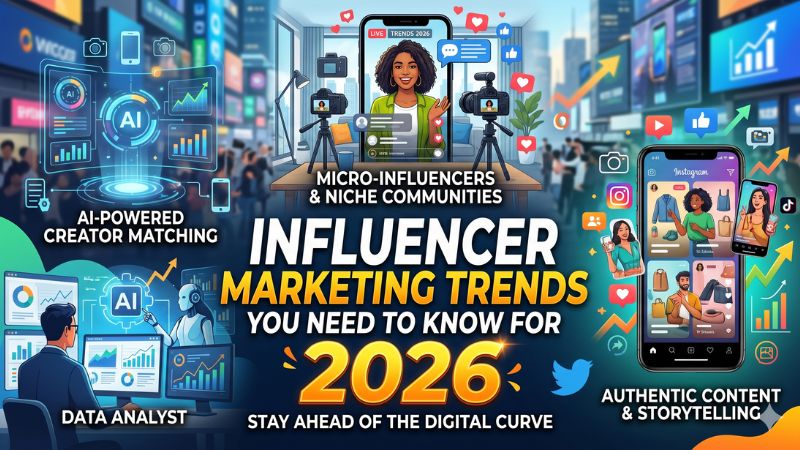
Influencer marketing in India has never been more interesting — or more complicated. The industry that started with a handful of YouTube beauty bloggers and Instagram travel accounts has expanded into a multi-thousand-crore ecosystem spanning every conceivable category, platform, language, and city. And right now, in 2026, it is going through the kind of structural change that separates brands that understand the shift from those that are still running 2022 strategies and wondering why the returns are declining.
The core change is this: the era of paying a creator with a large following for a post and hoping something happens is ending. Not because influencer marketing doesn't work — it works very well when it's done correctly — but because brands and marketers are finally demanding the same accountability from creator partnerships that they've always demanded from Google Ads and SEO. Tracking. Attribution. Outcome measurement. The creators and agencies that have built their workflows around producing these outcomes are thriving. Those that haven't are struggling to justify their rates.
At HivePulse Media, we manage influencer campaigns for businesses across Delhi NCR — from local clinics and coaching institutes to growing e-commerce brands and consumer startups. What we're sharing in this guide is not a list of trends compiled from industry reports. It's what we're seeing actually happen in campaigns right now — the shifts that are making the difference between influencer spend that generates real business growth and influencer spend that generates impressive screenshots.
Here are the influencer marketing trends that every brand and marketer in India needs to understand for 2026.
This is not a new observation, but the data in 2026 makes it impossible to ignore. Nano-influencers — creators with between 1,000 and 10,000 followers — are consistently delivering engagement rates that are four to eight times higher than macro-influencers and celebrities. And engagement, when it comes from a genuine audience that trusts the creator, converts at a meaningfully higher rate than passive reach from a creator whose audience has largely forgotten why they followed in the first place.
The reason is straightforward. A creator with 3,000 followers has a relationship with those followers. Their audience actually reads their captions, watches their stories to the end, and takes their recommendations seriously. When that creator says "I've been using this for two months and it works," their audience believes it — because they know this person, they've seen them show up consistently, and they don't have the context that this creator promotes forty brands a month (because they don't).
Contrast that with a macro-influencer posting their fourth "paid partnership" of the week. The audience has developed a sophisticated filter for exactly this kind of content. The post gets decent views because the creator has reach. It gets modest saves and shares because the content is good. But the conversion rate — the number of people who actually clicked the link, visited the website, made an enquiry, or bought the product — is frequently disappointing relative to the fee.
For Delhi businesses in particular — clinics, coaching institutes, retail outlets, restaurants, real estate firms, local service providers — this trend is genuinely actionable right now. A network of five to ten nano-influencers in your specific neighbourhood or category, each with a genuinely engaged local audience, will typically outperform a single macro-influencer on every metric that matters to a business owner: cost per lead, cost per conversion, and new customer acquisition rate.
What this means for your strategy: Stop treating follower count as the primary selection filter. Start treating authentic engagement rate — real comments, real saves, consistent story views relative to follower count — as the deciding criterion. Then build a nano and micro-influencer network that you can activate repeatedly, not a roster of expensive one-off posts.
The flat-fee influencer model — where a brand pays a creator a fixed amount for a post, regardless of what that post actually delivers — made sense when influencer marketing was new and nobody had figured out how to measure it properly. That period is over. In 2026, the brands seeing the best returns from influencer campaigns are those that have restructured their creator agreements around measurable outcomes.
A performance-linked contract works by tying part or all of a creator's payment to a defined, trackable output. This could be clicks via a unique UTM link, enquiry form submissions attributed to a creator-specific landing page, coupon or promo code redemptions, or verified product purchases tracked through an affiliate system. The creator doesn't get paid simply for posting — they get paid based on what the post actually generates.
This model benefits brands in two ways. First, it protects the budget. If a creator's post underperforms — which happens, even with talented creators — the brand isn't left paying a full fee for a result that didn't materialise. Second, it fundamentally changes the incentive structure for creators. When a creator knows their earnings depend on how well their content converts, not just on how pretty it looks, they approach the brief differently. They think harder about the call to action. They engage with their audience's questions in the comments. They follow up with Stories that add context. They behave, in short, more like a genuine brand partner than a content vendor.
Some creators resist performance-linked arrangements, and that resistance is itself informative. A creator who won't agree to any performance accountability is telling you that they don't believe their audience converts — which raises an obvious question about why you'd pay a flat fee for their audience at all. The creators who are worth partnering with in 2026 are generally comfortable with performance accountability because they know what their audience does.
What this means for your strategy: Start building performance accountability into your creator briefs from the next campaign. At minimum, every creator post should have a unique tracking link and a unique promo code. Your agency should be reporting on conversions attributed to each creator — not just aggregate campaign impressions.
Finding the right influencer used to mean scrolling through Instagram for hours, asking around for recommendations, and relying on gut feel about whether a creator's audience was real. In 2026, AI-powered creator discovery platforms have changed this process substantially — and the brands using these tools are building more effective creator networks at a fraction of the time cost.
Modern creator discovery tools can filter by follower count, engagement rate, audience demographic (age, gender, city, language), fake follower percentage, brand affinity, previous sponsorship history, content category, and posting frequency — simultaneously, across millions of creator profiles. What used to take days of manual research takes minutes.
More importantly, AI analysis can identify creators whose audience closely matches a brand's existing customer profile — not just creators who cover the right topic. A Delhi dental clinic doesn't just need a creator who talks about health. They need a creator whose audience is predominantly in specific Delhi neighbourhoods, in the right age bracket, with high engagement on health-related content. AI tools can surface exactly these profiles, and the difference in campaign performance between a well-matched creator and a category-adjacent one is significant.
Audience authenticity analysis is another area where AI has made a material difference. Fake follower detection has become sophisticated enough that it is now a standard pre-partnership check. The brands that skip this check in 2026 are paying real money for imaginary audiences — and the scale of the problem in India's influencer market remains substantial. Any agency managing your influencer campaigns should be running authenticity analysis as a matter of course before any creator agreement is signed.
What this means for your strategy: If your agency is still selecting influencers based primarily on follower count and content aesthetics, ask them directly what tools and data points they use to verify audience quality and demographic match. If the answer is vague, that's a meaningful gap in how your campaigns are being built.
This is perhaps the most underutilised insight in influencer marketing in India right now. The single sponsored post — a creator mentions your brand once, their audience sees it once, and then everyone moves on — is structurally the least efficient way to use influencer marketing. Yet it remains the most common format, largely because it's the easiest to execute and the easiest to budget.
The problem with the one-off post is that it asks an audience to trust a brand they've never heard of, based on a single recommendation from someone they follow. Some of the audience will click. A smaller fraction will convert. And then the moment passes, the post disappears from feeds, and the brand has to spend the same budget again to reach a fresh batch of new people who have also never heard of them.
Long-term creator partnerships work differently. When a creator mentions your brand once, their audience notices. When they mention it three months later, the audience remembers. When they show themselves actually using the product six months in — not in a polished brand collaboration format, but in the organic way creators share things that are genuinely part of their lives — that's when the conversion rates start to look genuinely impressive. Trust compounds. Familiarity compounds. And the cost per conversion decreases as the relationship deepens, because the audience has been primed by every previous touchpoint.
For Delhi businesses looking at influencer marketing as a serious customer acquisition channel, the shift from one-off posts to retained creator partnerships is the single most impactful change they can make to their influencer strategy in 2026. A commitment of three to six months with three to five well-chosen creators will consistently outperform twelve separate one-off posts with twelve different creators — at the same or lower total budget.
What this means for your strategy: Identify the two or three creators from your last campaign who drove the best attribution results. Offer them a three to six month partnership arrangement. Give them the space to integrate your brand naturally — not just as a posting obligation. Track the compounding effect on your conversion metrics over the partnership period.
This is the trend that most influencer marketers in India haven't started thinking about yet — which means the brands that act on it now have a genuine first-mover advantage that will be hard to replicate in twelve months.
GEO — Generative Engine Optimisation — is the practice of structuring your brand's content so that AI-powered tools like ChatGPT, Google AI Overviews, Perplexity, and Gemini can extract, understand, and cite your brand when users ask relevant questions. In traditional SEO, you optimise for Google's search algorithm. In GEO, you optimise for AI systems that are now answering questions directly — without the user clicking through to a website at all.
In 2026, a meaningful and growing share of business discovery in India is happening through these AI tools. Someone asks ChatGPT "which is the best skincare brand for oily skin that works well in Delhi's climate" and gets a direct answer. Someone asks Google AI Overviews "which digital marketing agency in Delhi is best for small businesses" and gets a curated list. The brands and businesses that appear in these answers are those that have structured their online presence — including their influencer content — in ways that AI systems can extract and cite.
Here's where influencer marketing connects to GEO in a way that almost no agencies are currently building for: influencer content — captions, video descriptions, blog posts by creator-partners, YouTube descriptions, transcribed reels — is indexed by AI systems. When a creator writes a detailed, structured caption that mentions your brand by name, describes your product's key attributes clearly, includes relevant category terms and location signals, and links back to your website, that content becomes a citable reference point in AI-generated answers. Multiply that across ten creators over six months, and you've built a network of AI-indexable brand references that traditional advertising cannot replicate.
At HivePulse Media, we have begun integrating GEO briefing into every influencer campaign we manage. This means our creator briefs now include specific instructions on caption structure, attribute language, and category terminology — not just aesthetic guidelines and posting schedules. The brands doing this now will have a compounding AI-discoverability advantage in the years ahead.
What this means for your strategy: Add GEO briefing to your creator guidelines. Instruct creators to write descriptive, structured captions that clearly identify your brand, your category, your key product attributes, and your location (for local businesses). Think of creator captions not just as social media content — think of them as AI-indexable brand signals.
Instagram Reels, YouTube Shorts, and ShareChat videos have settled the format question that brands were still debating three years ago. Video is not a supplementary format — it is the primary medium through which most Indian social media users discover new products, brands, and services. Static posts and carousels still have a place in content strategy, but they are supporting acts in 2026, not lead performers.
For influencer campaigns, this means that creator selection now needs to include video production capability as a non-negotiable criterion. A creator who posts excellent static photography but rarely produces video content is structurally limited in how much algorithmic reach they can generate for your brand. The platforms are prioritising video in feed ranking, in Explore and Discovery surfaces, and in AI-generated recommendation systems.
The format shift also has implications for creator briefing. A static post brief focuses on visual composition, caption, and hashtags. A video brief needs to address hook (the first 1.5 seconds that determine whether the viewer keeps watching), pacing, spoken and captioned brand mention timing, end-screen call to action, and thumbnail optimisation for YouTube. These are different skills, and not all creators have developed them equally.
Short-form video — Reels and Shorts — is particularly important for discovery with new audiences. Long-form YouTube content is increasingly important for in-depth product reviews, tutorials, and the kind of sustained brand storytelling that actually moves people down the purchase funnel. The most effective influencer campaigns in 2026 combine both: short-form for reach and awareness, long-form for trust and conversion.
For brands targeting Tier 2 and Tier 3 audiences in India — or for Delhi businesses targeting specific Hindi-speaking or regional-language consumer segments — ShareChat and Moj have become channels that cannot be ignored. The creator ecosystem on these platforms has matured significantly, and the engagement rates for relevant content are exceptional relative to the partnership costs.
What this means for your strategy: Prioritise creators with demonstrated video production capability. Build campaign briefs that specify Reels or Shorts as the primary deliverable. Consider platform diversification beyond Instagram — YouTube Shorts and ShareChat are delivering strong discovery reach for Delhi brands in 2026.
India's influencer market has a fake follower problem that is well-documented but still widely underestimated. The practice of purchasing followers, comments, and engagement has become sophisticated enough that casual inspection — scrolling through a creator's comments, looking at their engagement rate — is insufficient to identify artificially inflated accounts. AI-powered audit tools that analyse follower growth patterns, engagement velocity, comment authenticity, and audience geographic distribution have become essential.
In 2026, any brand paying for influencer content without first running an audience authenticity audit is taking a significant risk. The standard checks that a reputable influencer marketing agency should be running before recommending any creator include: fake follower percentage (anything above 15–20% warrants serious scrutiny), engagement rate authenticity (are the comments generic and from accounts with no profile pictures, or are they specific and from real accounts?), audience demographic verification (does the creator's stated audience match their actual audience age, gender, and city distribution?), and account growth pattern analysis (organic growth curves look fundamentally different from purchased growth spikes).
This is not about assuming bad faith from creators. Many genuinely talented creators have accumulated fake followers without having purchased them — early-stage follow-for-follow strategies, being included in engagement pods, or organic follow spikes that attracted bot activity. The audit is not a judgment; it's a due diligence step that protects your campaign budget.
What this means for your strategy: Make audience authenticity verification a fixed step in your creator onboarding process. Ask your influencer marketing agency to share audit reports before any creator is activated. If they cannot produce these reports, or if they discourage you from asking for them, find a different agency.
For the first four or five years of India's influencer marketing boom, the channel was almost exclusively a B2C phenomenon — consumer brands, lifestyle products, food, fashion, health, and travel. B2B brands were largely watching from the sidelines, uncertain about how creator partnerships applied to their category.
In 2026, LinkedIn's creator ecosystem in India has matured to the point where B2B influencer marketing is producing genuinely measurable results. Founders, industry experts, consultants, and functional leaders with engaged LinkedIn followings in specific professional categories are now a real and actionable channel for B2B brands targeting CXOs, HR professionals, finance teams, tech buyers, and marketing decision-makers.
The dynamics are different from consumer influencer marketing. B2B LinkedIn creators are typically thought leaders rather than product endorsers — the content format is opinion and insight, not product demonstration. The measurement metrics are different too: brand search lift, webinar registrations, demo request attribution, and LinkedIn follower growth tend to be more relevant than coupon redemptions. But the fundamental principle — a trusted voice reaching a relevant audience with a credible message about your brand — is identical.
For Delhi-based B2B companies — technology firms, HR solution providers, financial services, professional training companies, consulting practices — LinkedIn creator partnerships in 2026 represent an underpriced, underutilised channel with significantly less competition than consumer influencer platforms.
What this means for your strategy: If your brand is B2B, identify five to ten LinkedIn creators whose content is directly relevant to your target buyer profile. Engage them for thought leadership content — not product endorsements. Measure through brand search volume, inbound demo requests, and content engagement from your target company profiles.
One of the most consequential shifts in influencer marketing in 2026 is the compression of the purchase funnel. Traditionally, influencer content sat at the top of the funnel — awareness and consideration — while conversion happened elsewhere, usually through a brand's website or a retail outlet. The user saw a creator's post, felt interested, visited the website a few days later, and eventually made a purchase. The chain had multiple steps, each of which was an opportunity for the lead to drop off.
Creator-led commerce — the integration of direct purchase capability into creator content — is collapsing this chain. Instagram's shopping features, YouTube's product tagging, and WhatsApp Business integration mean that a user can go from seeing a creator's product recommendation to completing a purchase in the same session, sometimes in under two minutes. For brands with functional e-commerce infrastructure, this is a direct revenue channel, not just a brand awareness play.
For Delhi businesses without a full e-commerce setup — local service providers, clinics, coaching institutes, restaurants — the equivalent is the integration of WhatsApp direct contact into creator content. A creator posting about a Delhi physiotherapist can include a direct WhatsApp link in their bio or Story. The user clicks, sends a message, and becomes a qualified lead in the space of ninety seconds. The attribution is clean, the conversion path is short, and the cost per acquired enquiry is frequently lower than paid search.
What this means for your strategy: Build the shortest possible path from creator content to conversion action. For e-commerce: integrate shopping tags and landing pages with pre-filled cart items. For service businesses: use WhatsApp Business links as the primary CTA in creator briefs. Measure response time — leads that come through WhatsApp need to be responded to within fifteen minutes to maintain the conversion momentum the creator's content created.
The Advertising Standards Council of India (ASCI) has progressively tightened its guidelines on influencer disclosure since 2021, and in 2026 the enforcement environment is meaningfully stricter than it was even two years ago. All paid partnerships — whether they involve a monetary fee, gifted products, or any other commercial consideration — must be clearly disclosed at the beginning of content, in a way that is unmistakably visible before the viewer engages with the promotional message.
The "#ad" or "#sponsored" labels buried in a long caption or placed after fifteen other hashtags no longer meet the standard. For video content, verbal disclosure at the beginning of the video is required in addition to any text disclosure. The consequences of non-compliance fall on both the creator and the brand — and the reputational risk of being called out for undisclosed advertising in 2026, on a platform where audiences are increasingly sensitive to authenticity, is significant.
Beyond compliance, there is a strategic argument for transparency that brands often miss. Disclosure, when done well, doesn't damage a campaign — it can actually strengthen it. An audience that knows a creator has a genuine relationship with a brand, disclosed clearly and honestly, is more likely to trust the content than an audience that suspects an undisclosed commercial arrangement. Transparency is increasingly the standard, and the creators who handle it with confidence and naturalness tend to have audiences that respond better to their brand partnerships.
What this means for your strategy: Build disclosure compliance into every creator brief as a mandatory requirement. Review content before it goes live to verify disclosure placement. Work with creators who understand the ASCI guidelines and practise disclosure naturally — it's a signal of their professionalism as well as a legal requirement.
Every influencer trend we've described in this guide is built into the way HivePulse Media manages campaigns for clients across Delhi NCR. Here is what that looks like in practice.
We start with campaign objective definition — not "influencer marketing" as a generic budget line, but a specific, measurable goal: X number of qualified enquiries in 60 days, a Y% increase in brand search volume in a specific Delhi neighbourhood, Z product purchases attributable to creator content in a defined campaign window. The objective drives everything that follows: which creator tier, which platforms, which content formats, which measurement infrastructure.
Creator identification uses both AI-powered discovery tools and our growing network of verified Delhi NCR creators across Instagram, YouTube, ShareChat, and LinkedIn. Every creator is audited for audience authenticity before being shortlisted — fake follower percentage, engagement rate quality, audience demographic match, and content history are all reviewed. We don't pitch creators to clients based on follower count alone.
Contracts are structured with performance accountability built in where the brand's budget justifies it. Every campaign includes unique tracking links and creator-specific promo codes as a minimum. Briefs include GEO briefing — instructions on caption structure, brand attribute language, and category terminology that makes the content AI-indexable, not just socially visible.
Reporting is in plain language: which creator drove how many clicks, which creator's promo code was used how many times, what the cost per attributable enquiry was for each creator. Not impressions. Not reach. The metrics that tell a business owner whether the spend was justified.
And where results justify it, we recommend transitioning top-performing creators into long-term partnerships — building the compounding trust effect that one-off posts can never deliver.
If you're a Delhi business that has run influencer campaigns and been disappointed by the results, or if you're considering influencer marketing for the first time and want to do it correctly from the start, we'd genuinely like to talk to you.
📞 +91-8920805087
💬 WhatsApp
🌐 hivepulsemedia.com/influencer-marketing-packages.html
📧 support@hivepulsemedia.com
Influencer marketing in India is not getting simpler — it's getting more sophisticated. The brands that will win in 2026 are those that are moving away from the "pay a creator, hope for reach" model and toward a performance-accountable, AI-aware, long-term creator partnership approach. Every trend described in this guide points in the same direction: from vanity metrics toward business outcomes, from one-off posts toward relationship building, and from social-only visibility toward AI-powered discoverability.
The good news for Delhi businesses is that the sophistication required to execute influencer marketing well in 2026 doesn't require a massive budget — it requires the right partner. A nano-influencer network managed with proper attribution infrastructure, GEO-briefed content, and performance-linked contracts can deliver better results at ₹25,000 per month than a single macro-influencer post at five times the cost — if it's done correctly.
HivePulse Media is already running campaigns structured around every one of these trends for clients across Delhi NCR. If your current influencer strategy isn't delivering the attribution clarity and business results you need — or if you're starting from scratch — we'd like to show you what a properly structured campaign looks like.
📞 +91-8920805087 | 💬 WhatsApp | 🌐 hivepulsemedia.com/influencer-marketing-packages.html | 📧 support@hivepulsemedia.com


Copyright © 2025–2026. All Rights Reserved. HivePulse Media®


