
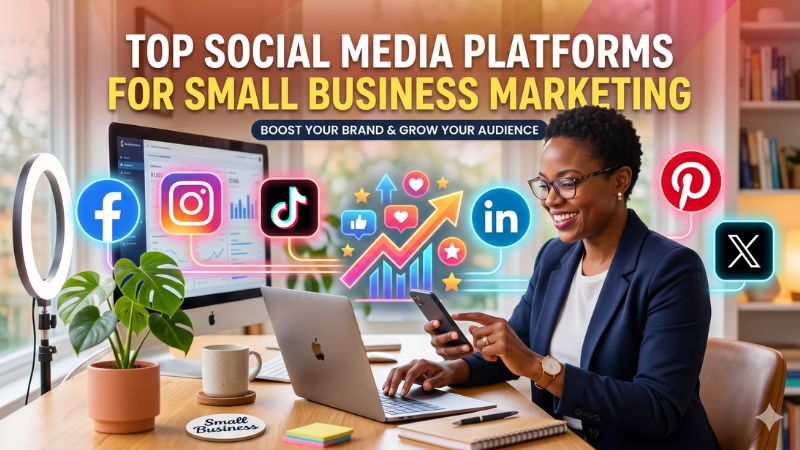
Social media is the single most accessible marketing channel available to small businesses today — and also the most misunderstood. Every small business owner knows they should be on social media. Very few know which platforms to be on, what to post, how often to post, when to run paid ads, and — most importantly — how to turn any of that activity into actual leads and sales.
The result is a predictable pattern: a business sets up a Facebook page and an Instagram account, posts inconsistently for three months, gets a handful of likes from friends and family, sees no enquiries, and concludes that social media marketing "doesn't work for us." The problem is rarely social media. The problem is strategy — or the absence of one.
This guide exists to give small businesses in India a clear, practical framework for social media marketing that is built around one thing: results. Not likes. Not reach for its own sake. Not vanity metrics that look good in a report and mean nothing in a bank account. Real results — enquiries, leads, footfall, sales, and long-term brand recognition that compounds over time.
What this guide covers:
With over 400 million users in India spanning urban metros, Tier 2 cities, and rural areas, Facebook remains the single most powerful social media platform for small businesses that want to reach a broad, diverse audience. No other platform offers the same combination of reach, targeting precision, and business tools at an accessible price point for small business marketing budgets.
What makes Facebook specifically valuable for small businesses is not just the user numbers — it is the depth of targeting available through Facebook Ads. A neighbourhood gym can target people within a 5 km radius who have shown interest in fitness. A coaching institute can target parents of school-going children in a specific city. A local restaurant can retarget people who visited their website but didn't make a reservation. This level of precision is the reason Facebook advertising continues to deliver strong ROI for small businesses even as organic reach from business pages has declined.
Facebook Groups are underused by most small businesses and represent a significant organic growth opportunity. A well-managed Facebook Group built around a topic your customers care about — rather than a group that is just a promotional feed for your business — builds community, trust, and a direct communication channel that algorithms can't suppress the way they suppress page posts.
Facebook Business Pages also function as a local SEO signal. A fully optimised Business Page with consistent NAP (Name, Address, Phone) information, regular posts, and active review management contributes to your local search visibility — including on Google, which indexes public Facebook page content.
Best for: Small businesses looking for the widest reach, strong paid targeting, and local community building. Particularly effective for retail, food and beverage, healthcare, education, and service businesses. Essential for any small business running paid social media campaigns.
Instagram's user base in India has grown explosively over the last three years, with a particularly strong concentration in the 18–34 age bracket. For small businesses in visually rich categories — fashion, food, beauty, fitness, home decor, travel, lifestyle — Instagram is not optional. It is the primary channel where your customers are making product discovery decisions and brand judgments every single day.
The platform's content ecosystem gives small businesses multiple formats to work with. Feed posts build your visual brand identity over time and appear in searches and hashtag feeds. Stories create daily touchpoints with your existing audience and are ideal for limited-time offers, behind-the-scenes moments, and polls. Reels are the highest-reach format on the platform right now — a well-made Reel from a small business with 500 followers can reach 50,000 people organically if the content resonates. Instagram Shopping allows e-commerce businesses to tag products directly in posts and Reels, creating a frictionless path from content discovery to purchase.
The single biggest mistake small businesses make on Instagram is treating it as a static catalogue. Instagram's algorithm rewards accounts that use multiple formats consistently, generate saves and shares (not just likes), and keep people on the platform. Content that teaches, entertains, or surprises performs dramatically better than content that just shows a product with a price.
Hashtags remain relevant for discoverability on Instagram, but the strategy has shifted. In 2026, a mix of 5–10 highly targeted, mid-volume hashtags (rather than 30 generic ones) produces better reach to genuinely interested audiences. Location hashtags are particularly valuable for local businesses trying to reach customers in a specific city or neighbourhood.
Best for: Businesses in visually driven categories, brands targeting 18–34 demographics, e-commerce businesses wanting direct social commerce, and any business that can consistently produce short-form video content.
If your business sells to other businesses — or to professionals making purchasing decisions on behalf of their organisations — LinkedIn is the most important social media platform you are probably underinvesting in. India's LinkedIn user base has grown significantly, and the platform is now the primary digital venue for B2B lead generation, professional credibility building, and direct outreach to decision-makers across industries.
For IT companies, software firms, consultancies, HR and recruitment businesses, financial advisors, training institutes, and any other professional services business, LinkedIn organic content is the most credible signal of expertise available on social media. A consistent stream of well-written posts on industry topics, case study summaries, and practical insights builds the kind of authority that converts a cold profile visit into a warm inbound enquiry over time.
LinkedIn Ads are significantly more expensive than Facebook or Instagram Ads on a cost-per-click basis, but the targeting capability is unmatched for B2B. You can target by job title, company size, industry, seniority level, and specific companies — meaning your ad is seen by the exact decision-maker in the exact type of organisation you want to work with. For small B2B businesses with a clearly defined ideal client profile, LinkedIn Ads deliver qualified pipeline that other platforms simply cannot match.
Company Pages on LinkedIn should be treated as a credibility checkpoint rather than a content hub. Most decision-makers who receive a connection request or see a cold outreach message will check the company page before responding. An incomplete or inactive company page is a trust-killer. Maintain it with regular posts, updated employee count, and accurate service descriptions.
Best for: B2B businesses, professional services firms, IT and software companies, coaching and training institutes targeting corporate clients, and any business where the buying decision is made by professionals rather than individual consumers.
TikTok was banned in India in 2020, but the short-form video format it popularised has been absorbed entirely into Instagram Reels and YouTube Shorts — and in many ways, the format is now bigger than it ever was. YouTube Shorts in particular represents a significant opportunity for small businesses that is still being underutilised: a platform with YouTube's search reach combined with TikTok-style short video discoverability.
The difference between YouTube Shorts and Instagram Reels for a small business comes down to longevity and search. Instagram Reels have a shelf life of a few days before they disappear from discovery feeds. A YouTube Short, once indexed, can continue generating views through YouTube Search and Google Search for months or years. A local plumber in Noida who creates a Short titled "How to fix a leaking tap at home" doesn't just get views on day one — that video becomes a search asset that drives awareness and inbound calls long after it was uploaded.
For small businesses that are already comfortable on camera — or are willing to become so — a strategy of 3–4 YouTube Shorts per month combined with occasional long-form educational videos creates a compounding content asset that works as both a social media channel and an SEO channel simultaneously.
Instagram Reels should run in parallel for the social discovery and direct messaging that YouTube doesn't offer. The two platforms are complementary, not competing — the same short-form video can be cross-posted to both with minimal additional effort.
Best for: Service businesses that can demonstrate expertise, e-commerce brands that can show products in use, local businesses that want long-term content assets, and any business whose target audience is heavy on mobile video consumption.
Pinterest occupies a unique position in the social media landscape: it is less a social network and more a visual search engine with a loyal, high-intent user base. In India, Pinterest has a dedicated following in categories like fashion, home decor, wedding planning, food, DIY, and lifestyle — and the businesses in these categories that invest in Pinterest often see a return that surprises them, primarily because their competitors haven't gotten there yet.
The distinctive characteristic of Pinterest content is longevity. On Instagram, a post's active life is 24–48 hours. On Facebook, organic reach fades within days. A well-optimised Pinterest Pin — with the right keywords in the title, description, and board name — can drive consistent organic traffic for 12–18 months or longer. For a small e-commerce business or a home decor brand, that is an enormous difference in content ROI.
Product Pins allow businesses to tag individual products with prices and links, so a user who discovers your pin in a search can click directly to your product page to purchase. Pinterest also has a strong integration with Shopify and WooCommerce, making catalogue management relatively seamless for e-commerce businesses that are already on those platforms.
Pinterest is not the right primary platform for most small businesses — it requires consistent effort to build a presence, and the audience is narrower than Facebook or Instagram. But for businesses in the right categories, it is an organic traffic channel that delivers long-term results at near-zero ongoing cost once the initial content library is built.
Best for: E-commerce businesses in fashion, home decor, food, DIY, beauty, and wedding categories. Content creators and lifestyle brands. Businesses looking for long-term organic traffic rather than immediate engagement.
The single most common reason small business social media marketing fails is a content strategy built entirely around what is easy to post rather than what serves the audience and moves them toward a buying decision. Posts that exist just to maintain a posting schedule — a stock photo with an inspirational quote, a repost of someone else's content, a product photo with a price — generate noise, not results.
Effective social media content for small businesses is built on four pillars, and a healthy content calendar balances all four:
Educational content is the highest-value long-term investment. A reel that answers a real question your customers ask — "How do I know if my website needs SEO?", "What's the difference between a serum and a moisturiser?", "How do I choose the right CA for my startup?" — positions you as an authority, generates saves, and earns algorithmic favour because it keeps people on the platform. Educational content builds trust faster than promotional content ever can.
Social proof content converts browsers into buyers. Customer testimonials, before-and-after transformations, case study summaries, and user-generated content are the social media equivalent of word-of-mouth referrals — the most persuasive form of marketing that exists. Every small business should be collecting this content systematically: asking satisfied customers for a short video testimonial, photographing results with permission, screenshotting positive WhatsApp messages to share as Stories.
Promotional content is necessary but should never dominate a content calendar. A reliable rule of thumb: for every promotional post, publish at least two educational or social proof posts. An audience that feels constantly sold to will disengage. An audience that consistently finds value in your content will look forward to your occasional offers and promotions.
Personality and community content is what separates memorable brands from forgettable ones. Behind-the-scenes videos, team introductions, day-in-the-life content, response posts to follower questions, and participation in relevant trending conversations show the human beings behind the business. People buy from people they like. Personality content is how small businesses build that likeability at scale.
Organic social media reach on most platforms has declined significantly over the last five years and will continue to decline. For a small business that needs to grow beyond its existing network, paid social media advertising is no longer optional — it is the accelerant that turns a good organic strategy into a lead generation engine.
The mistake most small businesses make with paid social is running it before the organic foundation is solid. If your Instagram profile has 12 posts, an incomplete bio, and no customer testimonials, a paid campaign will drive traffic to a page that doesn't convert. Paid amplification works best when it amplifies something that is already working organically — your best-performing post, your most-watched Reel, your highest-converting product.
Facebook and Instagram Ads are the right starting point for most Indian small businesses because the targeting flexibility is unmatched, the minimum daily budgets are accessible (as low as ₹300–₹500 per day), and the platform's machine learning optimisation has become genuinely effective at finding the right audience within a defined targeting framework. Start with one campaign objective, one audience, and one creative. Test before you scale.
The targeting options that typically work best for local small businesses: location radius targeting (1–10 km around your business), interest-based targeting layered with demographic filters, and — as you accumulate customer data — Lookalike Audiences built from your existing customer list or website visitors.
Retargeting is the highest-ROI paid social tactic available to small businesses and the most underused. A person who visited your website but didn't enquire, or who watched 75% of your video but didn't click — they are warm. They know you exist. A retargeting ad that shows them a testimonial, a limited-time offer, or a personalised message converts at dramatically higher rates than a cold awareness campaign, at a fraction of the cost.
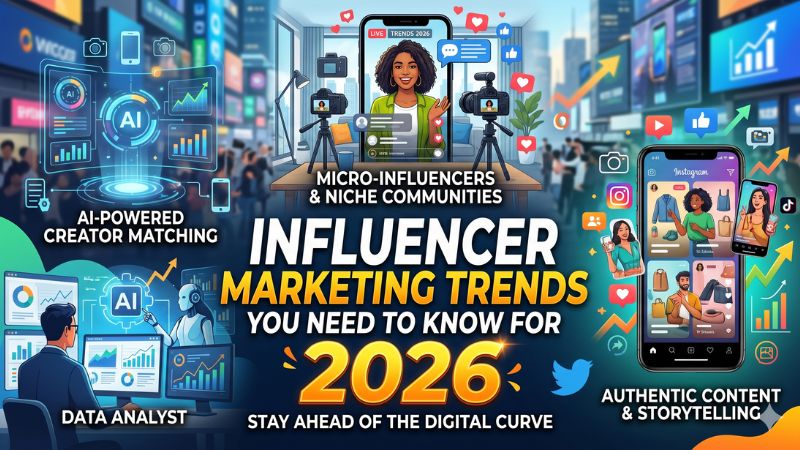
Influencer marketing is not just for brands with large budgets working with celebrity endorsers. For small businesses in India, micro-influencer marketing — partnerships with creators who have between 5,000 and 100,000 engaged followers in a specific niche or geography — delivers results that are often superior to large influencer campaigns at a fraction of the cost.
The reason micro-influencer campaigns work well for small businesses is specificity. A food blogger with 30,000 followers in Noida who regularly reviews local restaurants has a deeply engaged audience of exactly the right people for a local restaurant or cloud kitchen. That audience trusts the creator's recommendations in a way that no paid advertisement can replicate. When the creator posts an authentic review, the call to action generates bookings — not just views.
The criteria for selecting the right micro-influencer are: genuine engagement rate (comments and saves, not just likes), audience that matches your customer profile (check their follower demographics), content quality that aligns with your brand, and — critically — a track record of honest, editorial-quality content rather than a feed full of generic brand posts.
Before approaching any influencer, define what you want: brand awareness, direct sales, user-generated content you can repurpose, or a combination. Structure the brief clearly — the product or service, key messages, what not to say, and your preferred content format. Give the creator creative freedom within that brief: the most effective influencer content sounds like the creator, not a press release.
Social media platforms are designed to show you metrics that make the platform look valuable. Reach. Impressions. Follower count. Page views. These numbers are real, but they are not the metrics that tell you whether your social media marketing is generating a return on your investment. For a small business, the only metrics that ultimately matter are the ones that connect social media activity to business outcomes.
Enquiries and leads from social media is the foundational metric. Track this by using a dedicated WhatsApp link with a UTM source parameter, a landing page or contact form that asks how the person heard about you, or direct message enquiries from each platform. Every month, you should know exactly how many new leads came from Facebook, Instagram, LinkedIn, and organic versus paid.
Cost per lead (CPL) from paid social campaigns tells you the efficiency of your advertising spend. If you spent ₹10,000 on Facebook Ads and generated 40 enquiries, your CPL is ₹250. That number should be compared against the average revenue generated from a converted enquiry to assess whether the campaign is profitable. A CPL of ₹500 for a business where the average sale is ₹5,000 is excellent. The same CPL for a business where the average sale is ₹800 is unsustainable.
Content performance by format — understanding whether your Reels are outperforming your carousels, or whether your educational posts are generating more saves than your promotional posts — tells you where to concentrate your content effort going forward. Use this data to build a content strategy that doubles down on what works rather than continuing to produce what you've always produced.
Organic follower growth rate is a lagging indicator of whether your content strategy is working. A healthy small business social media account should be growing by at least 3–5% per month on its primary platform if the content and engagement strategy is sound. Flat or declining follower growth is a signal to review content quality and posting frequency.
"The small businesses that win on social media are not the ones who post the most — they are the ones who are most useful to their audience, most consistent in their execution, and most disciplined about measuring what actually drives their business forward."
Social media marketing for small businesses is not complicated in concept. It is hard in execution — because it requires consistency over months, discipline to measure outcomes rather than vanity metrics, and the willingness to invest in what works rather than what feels comfortable. The businesses that succeed on social media are not necessarily the ones with the largest budgets or the best production quality. They are the ones that are most useful to their audience, most consistent in their execution, and most honest about what they are actually trying to achieve.
Choosing the right platforms — based on where your specific customers are, not where you personally spend time online — is the first and most important decision. Building a content calendar that balances education, social proof, and promotion is the second. Running paid campaigns to amplify what already works organically is the third. And measuring everything against the outcomes that matter to your business — leads, sales, and customer acquisition cost — is what separates a social media strategy from a social media hobby.
If you're a small business in India and you want expert help building and managing a social media marketing strategy that delivers real results — not just content and reports — HivePulse Media is the agency to talk to. We manage social media marketing for small businesses across Delhi NCR and India, with transparent reporting, no long-term lock-ins on performance channels, and packages that are sized for real business budgets.
📞 +91-8920805087 | 💬 WhatsApp | 🌐 hivepulsemedia.com/contact.html


Copyright © 2025–2026. All Rights Reserved. HivePulse Media®


